
When it comes to machining stainless steel, the tools we use can make a significant difference. Among these tools, HRC68 end mills for stainless steel stand out as a popular choice, especially for their ability to handle the unique challenges posed by this tough material. Understanding what these end mills are and how to select the right one is crucial for anyone involved in machining tasks.
Understanding HRC68 End Mills
HRC68 end mills are made from high-speed steel or carbide, and they are specifically designed to work effectively with stainless steel. The term “HRC68” refers to the hardness of the tool on the Rockwell hardness scale, indicating that it can withstand the rigors of cutting hard materials like stainless steel without dulling quickly. This hardness level is essential for maintaining sharpness, which in turn helps achieve precise cuts and smooth finishes.
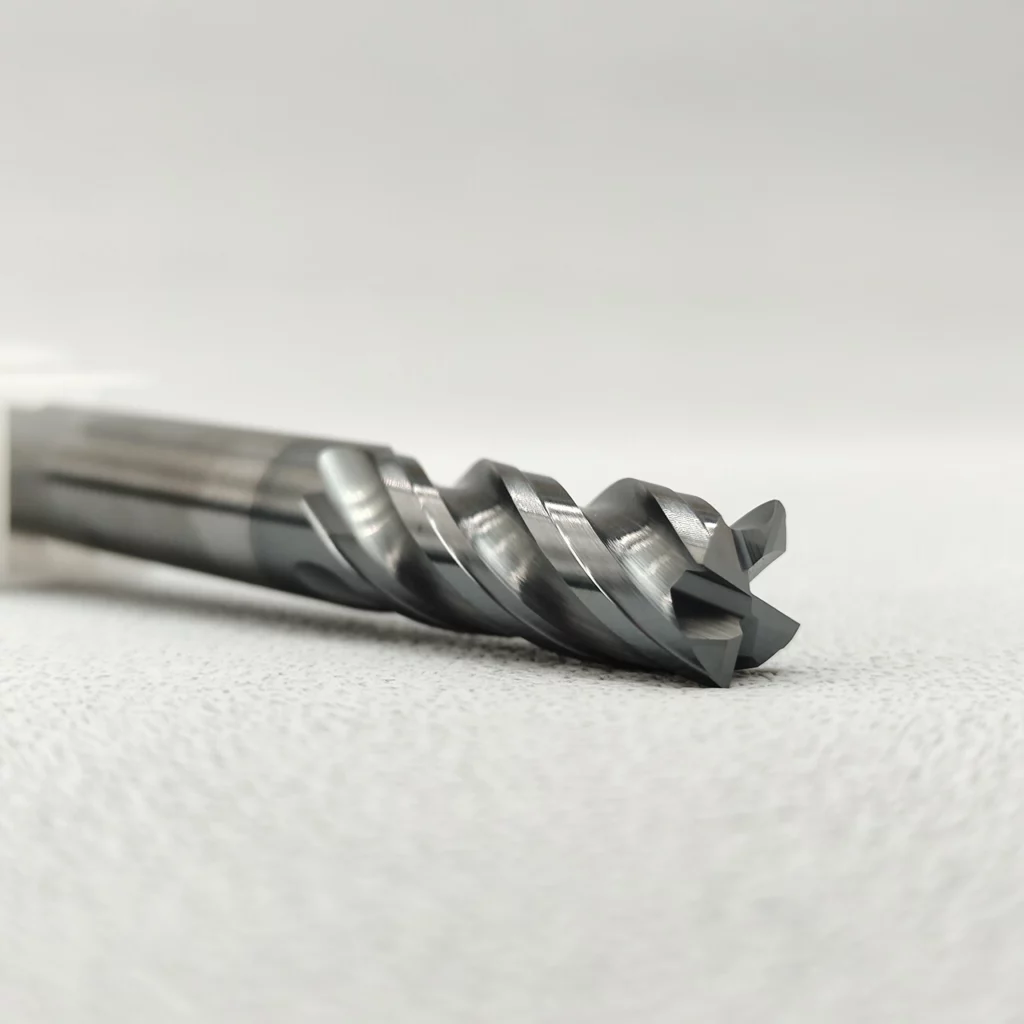
The Benefits of HRC68 End Mills
One of the primary advantages of HRC68 end mills for stainless steel is their durability. Stainless steel is known for its toughness; it can be abrasive and cause wear on cutting tools. However, end mills with higher hardness levels significantly improve tool life, meaning they can be used for extended periods before needing replacement. This not only saves money in the long run but also minimizes downtime in production.
Another significant benefit is the improved cutting performance. HRC68 end mills can handle higher speeds and feeds, making them more efficient than lower-grade tools. For example, a manufacturer machining high-end medical equipment from stainless steel would require precision and speed, making HRC68 end mills the ideal choice for such demanding applications.

Application Areas of HRC68 End Mills
HRC68 end mills are widely used in various industries, thanks to their robust performance. Industries such as aerospace, automotive, and medical often rely on these tools for machining stainless steel components.
In the aerospace industry, for example, manufacturers often deal with complex geometries and tight tolerances. Using HRC68 end mills allows them to achieve high precision in components like turbine blades and landing gear parts, where even a minor error can have significant consequences.
Similarly, in the production of stainless steel valves and fittings for the automotive industry, the durability and reliability of HRC68 end mills ensure that the parts can withstand harsh conditions. Here, consistency is key; using high-quality end mills reduces variability in the machining process, leading to uniform product quality.
The medical field has its unique demands as well. Tools must not only be durable and precise but also adhere to strict hygienic standards. HRC68 end mills enable manufacturers to create intricate designs for surgical instruments, ensuring they are both effective and safe to use.
How to Choose the Right HRC68 End Mill
Choosing the right HRC68 end mill for stainless steel requires attention to several factors. The first step is to consider the specific machining application. For example, if you’re working on a part that requires a lot of contouring or profiling, a ball-end mill may be more appropriate. Meanwhile, for slotting or contouring operations, a square-end mill is often favored for its straight edges.
Another factor is the geometry of the end mill. Different flutes can have different impacts on chip removal and cutting efficiency. For stainless steel, a four-flute design can be advantageous as it provides a balance between strength and efficiency, allowing for fast material removal without compromising the integrity of the end mill.
It’s also essential to consider the coating on the end mill. Many HRC68 end mills come with specialized coatings, such as TiAlN (Titanium Aluminum Nitride) or TiN (Titanium Nitride). These coatings help further improve wear resistance and enhance performance in high-temperature situations. Therefore, selecting an end mill with the right coating can make a significant difference in the overall machining process.
Abschluss
In summary, HRC68 end mills for stainless steel are a vital component for industries aiming for precision and durability in their machining processes. Their hardness levels contribute to extended tool life, reduced manufacturing costs, and improved cut quality — benefits that resonate strongly with manufacturers. By they understanding the specific application needs, end mill geometry, and coatings available, users can make informed decisions about which HRC68 end mills will work best for their stainless steel machining requirements.
Purchasing the right HRC68 end mills is more than just selecting a tool; it’s about enhancing production efficiency, ensuring product safety, and maintaining the standards that customers expect.
Get Technical Data & Expert Advice:
- Download specs & technical guides: www.grewintools.com or www.gwcarbide.com
- For Russian customers: www.grewintools.ru
- Connect directly for samples or consultation:
- Contact: Lydia Choo
- WhatsApp: +86-18673327292
- Email: info@gwcarbide.com
- Additional product lines: www.coweecarbide.com
 German
 English
 Chinese
 French
 Portuguese
 Spanish
 Turkish
 Russian
 Polish