
In modern manufacturing, achieving precision is paramount. High hardness solid carbide rods have emerged as a critical tool for advancing machining accuracy and efficiency. With their exceptional durability and superior mechanical properties, these rods play a vital role in high-performance machining applications. This article examines how these specialized tools improve manufacturing processes and help industries meet increasingly demanding quality standards.
What Are High Hardness Solid Carbide Rods?
High hardness solid carbide rods are engineered from tungsten carbide particles bound together with cobalt through advanced sintering processes. This composition creates a material structure characterized by extreme hardness—typically measuring over 90 HRA on the Rockwell scale—and outstanding wear resistance. Unlike conventional tool steels, these rods maintain their cutting geometry even under prolonged operation, ensuring consistent machining performance across production cycles.
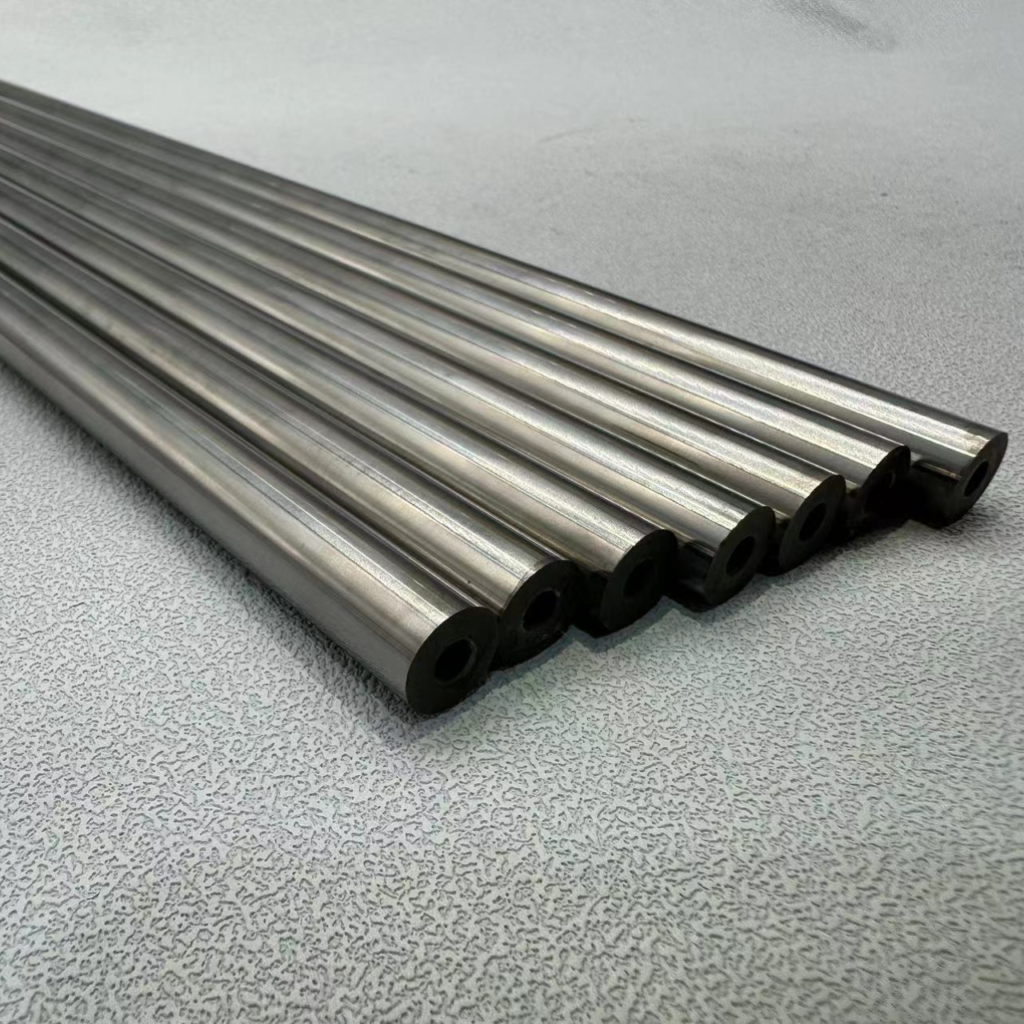
Benefits of High Hardness Solid Carbide Rods
1. Maior durabilidade e resistência ao desgaste
The exceptional hardness of solid carbide rods translates directly into superior wear resistance. When machining hardened steels, titanium alloys, or nickel-based superalloys, these rods demonstrate significantly longer service life compared to conventional tooling. For aerospace component manufacturers, this durability means fewer tool changes, reduced machine downtime, and lower overall tooling costs—factors that contribute directly to improved production economics.
2. Precision Cutting Capabilities
High hardness carbide rods maintain sharp cutting edges through extended machining operations, enabling consistent dimensional accuracy. This stability is particularly valuable in applications requiring tight tolerances, such as medical implant manufacturing or precision gear production. By minimizing tool deflection and edge degradation, these rods help manufacturers achieve surface finishes and dimensional accuracy that meet or exceed industry specifications without secondary processing.
3. Superior Thermal Stability
The thermal conductivity and heat resistance of solid carbide rods allow them to maintain structural integrity at elevated temperatures. During high-speed machining of materials like stainless steel or high-temperature alloys, conventional tools may experience rapid thermal softening, while carbide rods continue to perform effectively. This thermal stability reduces the risk of workpiece thermal damage and extends the operational window for productive machining.
4. Faixa de aplicação versátil
From micro-drilling in electronics manufacturing to heavy milling in mold and die production, high hardness carbide rods demonstrate remarkable adaptability. Their performance consistency across different materials—including composites, hardened steels, and non-ferrous metals—makes them a preferred solution for job shops and production facilities handling diverse machining requirements. The automotive sector particularly benefits from this versatility in producing engine components, transmission parts, and braking system elements.
5. Cost-Effectiveness Through Performance
While the initial investment in high hardness carbide rods exceeds that of conventional tooling, their extended service life and consistent performance deliver compelling total cost advantages. Manufacturers implementing these rods typically report reduced per-part machining costs, lower inventory requirements for replacement tools, and increased machine utilization. For high-volume production environments, these economic benefits significantly impact overall operational efficiency and profitability.
Selecting Appropriate High Hardness Carbide Rods
Diameter and Length Specifications
Choosing the correct rod dimensions requires consideration of specific machining applications, machine tool capabilities, and workpiece characteristics. Proper selection ensures optimal tool rigidity and prevents vibration-related issues during high-speed operations.
Microstructure Characteristics
The grain size distribution within carbide rods influences both toughness and wear resistance. Ultra-fine grain structures generally provide enhanced edge strength for interrupted cutting conditions, while medium grain sizes may offer better wear resistance for continuous machining applications.
Advanced Surface Treatments
Specialized coatings such as TiAlN, AlCrN, or diamond-like carbon (DLC) can further enhance the performance of carbide rods. These treatments reduce friction coefficients, improve chip evacuation, and provide additional thermal barriers—particularly beneficial in dry machining or high-speed applications.
Strategic Implementation Considerations
Successful integration of high hardness carbide rods requires attention to machining parameters optimization, proper tool holding systems, and appropriate coolant strategies. Manufacturers should collaborate with technical specialists to develop application-specific protocols that maximize tool performance while ensuring workplace safety and operational efficiency.
Conclusion: Advancing Manufacturing Capabilities
High hardness solid carbide rods represent more than just cutting tools—they are enablers of manufacturing excellence. Their unique combination of hardness, wear resistance, and thermal stability addresses fundamental challenges in modern machining operations. As manufacturing technologies continue to evolve toward higher precision requirements and more challenging materials, these advanced tooling solutions provide the reliability and performance needed to maintain competitive advantage.
Manufacturers investing in high hardness carbide rods are not merely purchasing tools but making strategic commitments to quality improvement, process optimization, and long-term operational efficiency. By understanding and leveraging the full capabilities of these advanced materials, companies can significantly enhance their machining processes, improve product quality, and strengthen their position in increasingly demanding markets.
Contact Our Specialists: +86-18673327292
Email Your Requirements: info@gwcarbide.com
Explore Our Full Range: https://grewintools.com
https://www.coweecarbide.com
 Portuguese
 English
 Chinese
 German
 French
 Spanish
 Turkish
 Russian
 Polish