
In demanding industrial environments where equipment faces constant abrasion, impact, and corrosion, material selection determines operational success. Carbide rods have emerged as the engineering solution for applications requiring uncompromising wear resistance. This technical analysis examines how tungsten carbide rods outperform conventional materials, reduce operational costs, and extend equipment lifespan across critical industries.
Material Science: Why Carbide Excels in Wear Applications
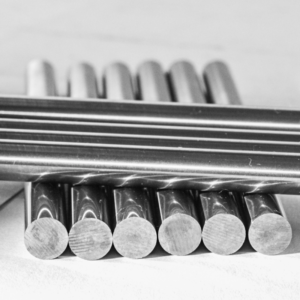
Carbide rods consist of tungsten carbide particles (85-95%) bonded with cobalt matrix through liquid-phase sintering. This unique microstructure delivers:
Key Physical Properties:
-
Hardness: 1500-2000 HV (3-4× harder than tool steel)
-
Compressive strength: 350-700 ksi
-
Elastic modulus: 94×10⁶ psi
-
Density: 14-15 g/cm³
Wear Resistance Performance Data
1. Abrasion Resistance
Carbide rods demonstrate exceptional performance in abrasive environments:
-
Abrasion resistance index: 8.5 (compared to 1.0 for hardened steel)
-
Volume loss: 70-85% reduction versus high-chrome cast iron
-
Service life: 5-8 times longer in sand-handling applications
Industrial Case: Mining conveyor systems using carbide rod components reduced replacement frequency from quarterly to annually, decreasing maintenance costs by 62%.
2. Impact Wear Performance
The combination of hardness and toughness makes carbide rods ideal for impact applications:
-
Impact toughness: 2.5-4.0 MPa·m¹/²
-
Fatigue strength: 2-3 times greater than tool steel
-
Crack propagation resistance: Excellent due to cobalt binder phase
3. Erosion-Corrosion Resistance
Carbide rods withstand combined mechanical and chemical attack:
-
Corrosion rate: <0.1 mm/year in most industrial environments
-
pH resistance: Stable across pH 3-11 range
-
Temperature tolerance: Maintains properties up to 1000°F (538°C)
Application-Specific Performance Improvements
| Industry | Application | Performance Enhancement |
|---|---|---|
| Mining | Crusher liners & tips | 500% lifespan increase, 40% throughput improvement |
| Oil & Gas | Valve trim & seats | Zero leakage after 5M cycles, 85% less maintenance |
| Power Generation | Coal pulverizer rolls | 3× service life, reduced unplanned downtime |
| Cement | Raw mill grinding media | 70% reduction in metal consumption per ton |
| Steel Manufacturing | Rolling mill guides | Surface finish improvement, 60% longer service |
Thermal and Frictional Advantages
Heat Management
-
Thermal conductivity: 100 W/m·K (4× higher than tool steel)
-
Thermal expansion: 5.5×10⁻⁶/°C (half that of steel)
-
Heat checking resistance: Superior to most wear materials
Friction Characteristics
-
Coefficient of friction: 0.4-0.6 against steel (dry conditions)
-
Lubrication enhancement: Excellent oil retention in surface porosity
-
Galling resistance: Minimal material transfer in sliding contacts
Design Considerations for Optimal Performance
Material Selection Guidelines
-
Standard grades (C1-C4): General wear applications
-
Fine grain grades: Enhanced toughness for impact conditions
-
Cobalt content variations: 6-12% for specific toughness requirements
-
Specialized grades: Nickel-binder variants for corrosive environments
Engineering Design Factors
-
Surface preparation: Proper finishing reduces stress concentrations
-
Transition design: Gradual hardness gradients prevent delamination
-
Cooling integration: Internal cooling channels for high-heat applications
-
Mounting optimization: Minimizes stress concentrations at interfaces
Economic Analysis: Total Cost of Ownership
Comparative Cost Model (5-year period):
-
Initial investment: 3-4× higher than chromium steel components
-
Maintenance costs: 60-75% reduction
-
Downtime expenses: 40-55% decrease
-
Production losses: 25-35% improvement
-
Overall savings: 45-65% lower total cost
ROI Timeline: Most operations achieve payback within 8-14 months through reduced maintenance and improved uptime.
Installation and Maintenance Protocols
Best Practices
-
Proper handling: Avoid impact damage during installation
-
Controlled heating: Use induction heating for interference fits
-
Bolt torque sequencing: Follow manufacturer specifications precisely
-
Run-in procedures: Gradual load increase during initial operation
Maintenance Optimization
-
Condition monitoring: Vibration analysis and thickness measurements
-
Predictive replacement: Schedule based on measured wear rates
-
Reconditioning options: Thermal spray overlay for certain applications
-
Inventory optimization: Just-in-time spare parts based on wear data
Industry Innovations and Future Trends
Technological Advancements
-
Functionally graded carbides: Tailored properties through thickness
-
Composite structures: Carbide-steel hybrids for specific applications
-
Additive manufacturing: Complex geometries previously impossible
-
Smart monitoring: Embedded sensors for real-time wear tracking
Sustainability Considerations
-
Material efficiency: Extended life reduces resource consumption
-
Energy savings: Reduced friction lowers power requirements
-
Recycling programs: Closed-loop material recovery systems
-
Carbon footprint: Lower overall emissions through reduced replacements
Implementation Strategy for Maximum ROI
For organizations considering carbide rod implementation:
-
Criticality assessment: Identify components with highest maintenance costs
-
Pilot testing: Validate performance in controlled applications
-
Performance benchmarking: Establish baseline metrics
-
Training programs: Ensure proper installation and maintenance
-
Continuous improvement: Regular review of performance data
Conclusion: The Strategic Imperative of Advanced Wear Solutions
Carbide rod technology represents a fundamental shift in how industries approach equipment durability and operational efficiency. The demonstrated improvements in wear resistance translate directly to:
-
Enhanced reliability through reduced unplanned downtime
-
Cost leadership via optimized maintenance expenditures
-
Production consistency with predictable equipment performance
-
Competitive advantage in demanding operational environments
Forward-thinking organizations recognize that investing in carbide wear solutions is not merely a maintenance decision but a strategic operational choice that delivers measurable financial returns and positions them for sustainable success in increasingly competitive markets.
Ready to transform your wear component performance? Contact our materials engineering team for a comprehensive wear analysis and customized carbide rod solution designed for your specific operational challenges.
Contact Our Specialists: +86-18673327292
Email Your Requirements: info@gwcarbide.com
Explore Our Full Range: https://grewintools.com
https://www.coweecarbide.com
 Russian
 English
 Chinese
 German
 French
 Portuguese
 Spanish
 Turkish
 Polish