
İçindekiler
DeğiştirIn modern manufacturing hole processing scenarios, carbide drill bits have become core tools for addressing high-difficulty machining demands due to their unique properties. Their most critical value lies in their ability to overcome processing bottlenecks in industrial production by efficiently, accurately, and durably machining hard materials that are challenging or even impossible to process with conventional high-speed steel (HSS) drill bits.
This article explores the application value of carbide drill bits from two core dimensions: “machined materials” and “application fields.”
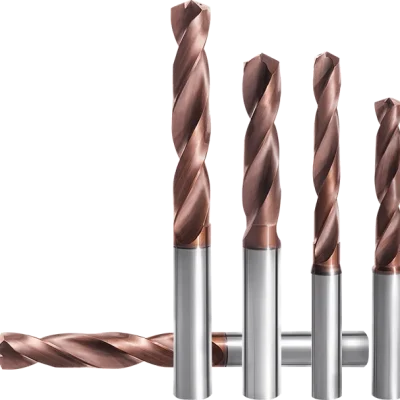
I. Classified by Material: Conquering the Toughest "Hard Bones"
1. Tackling Various High-Strength Steels
Carbide drill bits overcome the challenges of high hardness and work hardening in steels:
High-Hardness Steels: Such as tool steel and quenched steel (over HRC45). Carbide maintains stable cutting, preventing chipping and rapid wear.
High-Strength Alloy Steels: Used in critical components. The extreme rigidity of carbide drill bits withstands high cutting forces without bending.
Stainless Steels (e.g., 304, 316): Prone to work hardening. Carbide keeps a sharp edge longer, easily breaking through hardened layers for continuous drilling.
2. Resisting Abrasive Wear in Cast Iron
Materials like gray iron (HT) contain abrasive graphite particles. The superior wear resistance of carbide drill tools counteracts this abrasion, ensuring long life and stable machining.
3. Withstanding Extreme Environments: Superalloys & Titanium
Nickel-Based Alloys (e.g., Inconel 718): Retain strength at high temperatures and cause severe work hardening. Only karbür matkaplar can handle the heat and hardened layers.
Titanium Alloys (e.g., TC4): Poor thermal conductivity concentrates heat at the drill bit tip. Carbide’s heat resistance prevents rapid failure from overheating.
4. Adapting to Specialized Non-Ferrous Metals & Composites
High-Silicon Aluminum (e.g., ADC12): Hard silicon particles act like sandpaper. Carbide drill wear resistance is essential.
Adhesive Copper Alloys: Carbide’s smooth edges and anti-adhesion properties prevent chip buildup for clean holes.
Composites (CFRP/GFRP): Abrasive fibers wear tools quickly. Specially designed carbide drill bits minimize fiber splintering for clean edges.
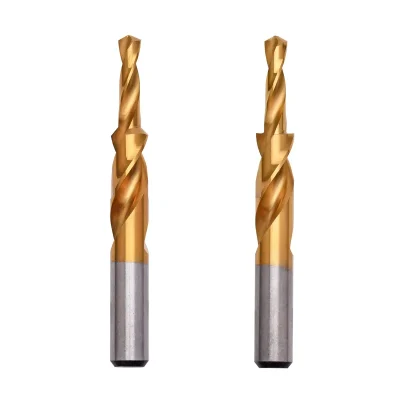
II. Classified by Application: The Standard for Modern, Efficient Manufacturing
Carbide drill bits are indispensable in scenarios demanding efficiency, precision, and stability.
1. High-Speed Automated Production (CNC)
CNC machining centers require high speeds and feed rates to minimize cycle times. The strength and wear resistance of karbür matkaplar enable stable, high-performance cutting, maximizing automated line efficiency.
2. High-Precision Hole Making
In precision industries (e.g., hydraulics, engines), hole tolerance and finish are critical. Carbide drill bits offer superior rigidity and stability, often achieving “drilling instead of reaming,” which eliminates finishing steps and reduces costs.
3. High-Volume Mass Production
In automotive lines drilling thousands of holes daily, consistent tool life and precision are vital. Carbide drills provide exceptional lifespan and minimal precision deviation, ensuring stable production rhythm and low cost-per-hole despite a higher initial price.
4. Demanding Aerospace Manufacturing
Aerospace is a key domain for carbide drill bits, machining titanium, superalloys, and composites. They are essential for meeting the extreme reliability and quality standards in engine and airframe component machining.
Summary: When to Choose Carbide Drill Bits
Carbide drill bits are the optimal, often irreplaceable choice when your operation involves:
Hard, abrasive, or adhesive materials.
CNC or other automated equipment for high-speed production.
Requirements for high precision and superior hole quality.
High-volume runs where consistent tool life and low cost-per-hole are critical.
Their higher initial cost is offset by gains in productivity, quality, and long-term savings, making them the standard in modern manufacturing.

Contact Our Specialists: +86-18673327292
Email Your Requirements: info@gwcarbide.com
Explore Our Full Range: https://grewintools.com
https://www.coweecarbide.com
https://gwcarbide.com
Carbide drill bits are ideal for drilling hard materials like stainless steel, cast iron, titanium, and abrasive composites. They are much more effective than standard HSS bits for these tough applications.
Its primary advantage is exceptional hardness and heat resistance, allowing it to retain its sharpness and cut efficiently at high speeds in hard materials where other bits would fail.
While extremely hard, standard carbide twist bits are not typically the first choice for basic wood or masonry. However, specialized carbide-tipped bits are commonly used for masonry drilling.
For best results and to avoid breakage, use them in a rigid setup like a drill press or a powerful, stable handheld drill. They require higher speeds and feed rates than standard bits.
They are more expensive due to the cost of the tungsten carbide material and the complex manufacturing process, but their superior performance and longevity in hard materials justify the cost.
 Turkish
 English
 Chinese
 German
 French
 Portuguese
 Spanish
 Russian
 Polish