
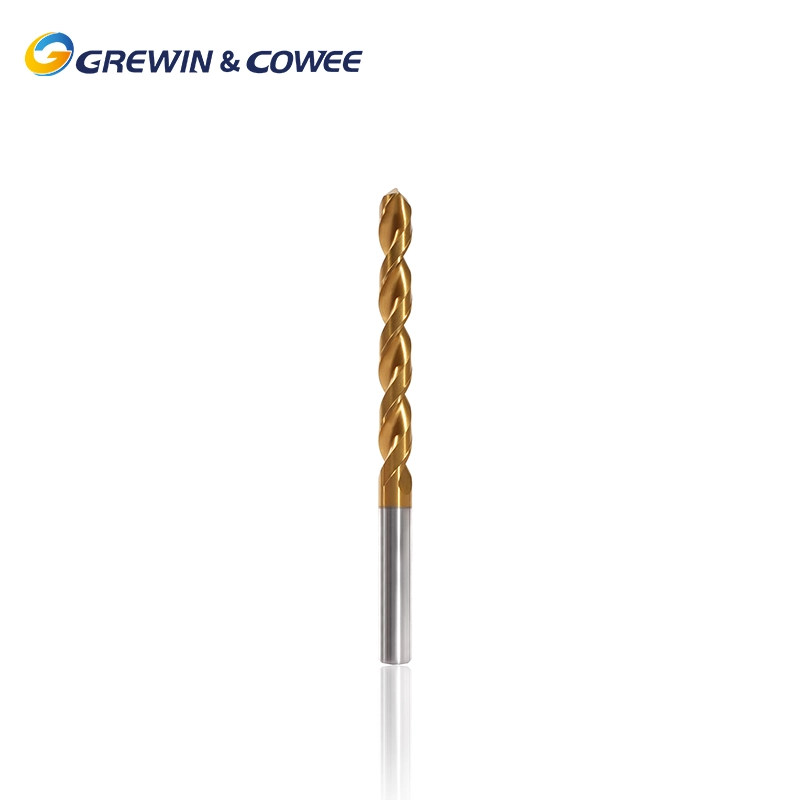
What Are Solid Carbide Drills?
Solid carbide drills are cutting tools made entirely from carbide, a compound composed primarily of tungsten and carbon. Unlike drills made from steel, solid carbide drills provide greater wear resistance, cutting efficiency, and stability under high temperatures. They are widely used in industries requiring precision and the ability to cut through tough materials, such as aerospace, automotive, and heavy machinery manufacturing.
According to a 2023 report by Grand View Research, the global market for cutting tools, including drills, is expected to grow significantly, driven by increasing demand for high-precision tools in advanced manufacturing sectors. Solid carbide drills are expected to account for a large share of this growth due to their unmatched performance.
Why Choose Solid Carbide Drills?
Solid carbide drills offer several key advantages over conventional high-speed steel (HSS) drills. Below are the most compelling reasons to use solid carbide drills in your machining processes:
增强耐用性
Solid carbide’s hardness is significantly higher than that of high-speed steel, enabling it to endure more wear and tear. This means that solid carbide drills last longer and require fewer replacements, which results in cost savings over time.Improved Cutting Performance
The hardness of carbide allows for higher cutting speeds and feed rates, increasing productivity without compromising the quality of the finished product. As Machining News, a leading industry publication, notes, solid carbide drills can handle cutting speeds up to 3-4 times higher than steel drills without losing performance.卓越的精度
Solid carbide drills retain their sharpness for longer periods, ensuring precise and consistent hole dimensions even after extensive use. This is crucial in industries where tight tolerances are required, such as aerospace and medical device manufacturing.Better Surface Finish
Because of their ability to stay sharper longer, solid carbide drills also provide smoother, more consistent surface finishes. This is especially important for applications like deep-hole drilling and when working with high-performance materials that require flawless finishes.Resistance to Heat
Carbide tools can withstand higher temperatures compared to HSS, making them ideal for high-speed drilling operations where heat buildup could otherwise lead to tool wear and reduced cutting efficiency.
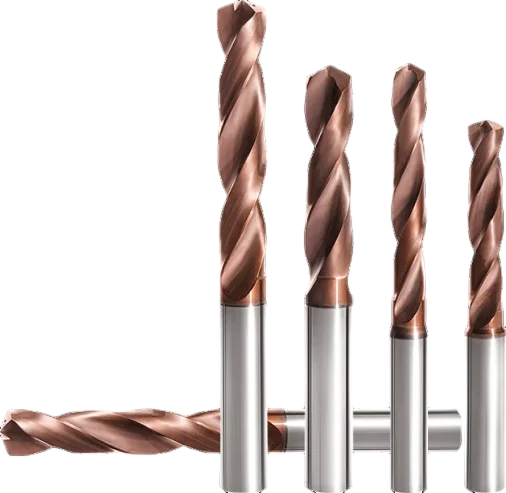
Types of Solid Carbide Drills
Solid carbide drills come in several variations designed to suit different applications. Choosing the right type of drill is crucial to achieving optimal results.
Straight Drills
These are the most common type of solid carbide drills used for general-purpose drilling. They have a simple design and are effective for drilling straight holes in a wide variety of materials.Spotting Drills
Spotting drills are used to create a small indentation on the surface before drilling the final hole. This helps ensure accuracy and prevents the main drill bit from slipping during operation.Twist Drills
Twist drills are designed with two helical flutes, which efficiently remove material from the hole as the drill advances. These are ideal for deep-hole drilling and applications requiring high-performance cutting.Step Drills
Step drills are useful for drilling holes of varying diameters in a single pass. They are widely used in applications where multiple hole sizes are required.Gun Drills
These specialized drills are used for deep-hole drilling. They have a unique design that helps evacuate chips more effectively, allowing for high-precision drilling of deep, narrow holes.
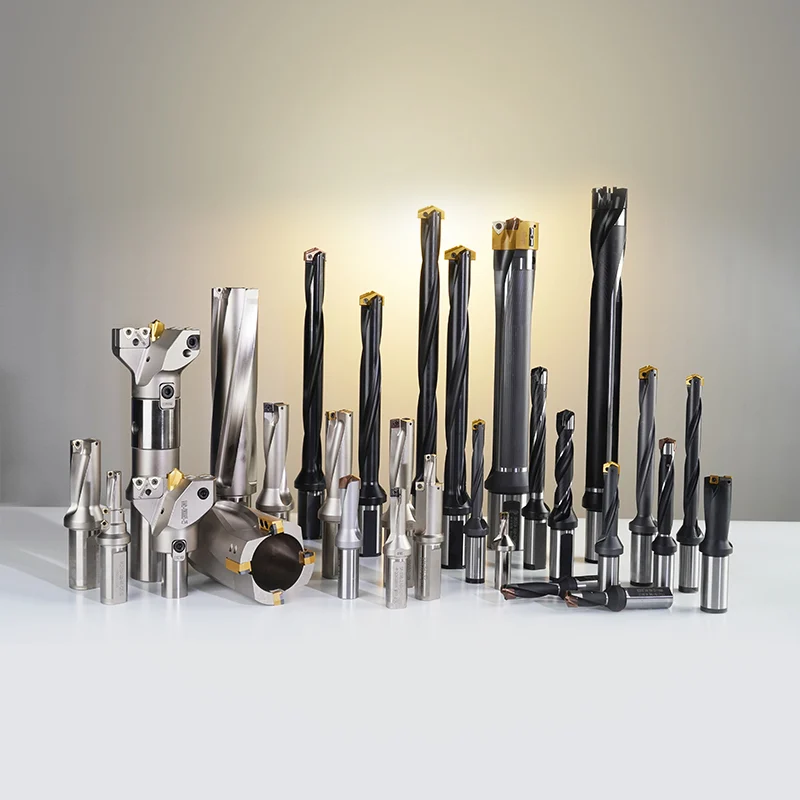
How to Choose the Right Solid Carbide Drill
Selecting the appropriate solid carbide drill requires careful consideration of several factors:
Material to Be Drilled
The material you’re drilling into has a direct impact on drill performance. For example, when working with tough materials like titanium, you may need a solid carbide drill with specialized coatings to improve wear resistance.Cutting Speed and Feed Rate
Solid carbide drills perform best at higher speeds and feeds. However, it is important to match the tool’s cutting capabilities with your machine’s capabilities and the material being drilled.Coatings
Coated carbide drills, such as those with TiN (Titanium Nitride) or TiAlN (Titanium Aluminum Nitride) coatings, provide additional wear resistance and heat tolerance, increasing tool life and cutting performance.Hole Depth
For deep-hole drilling, consider using specialized drills like gun drills or high-performance twist drills. These tools are designed for deep, accurate hole-making without compromising efficiency.Drill Geometry
The geometry of the drill, including the point angle and flute design, should be matched to the type of hole and material being drilled. For instance, a 140° drill angle is typically used for softer materials, while a 118° angle is more suitable for harder materials.
Applications of Solid Carbide Drills
Solid carbide drills are commonly used in various industries where precision is critical:
Aerospace Manufacturing
In the aerospace industry, where parts must be highly accurate and made from tough, high-strength materials, solid carbide drills are essential for producing components with tight tolerances and smooth finishes.Automotive Industry
Solid carbide drills are widely used in automotive manufacturing, particularly for drilling through tough metals like aluminum, cast iron, and steel.Medical Device Manufacturing
The medical device sector requires precision and high-quality finishes for the components they manufacture. Solid carbide drills ensure that even intricate medical devices are produced to exact specifications.Tool and Die Making
In tool and die making, solid carbide drills are used to produce molds, dies, and precision tools with complex geometries. The ability to handle hard materials and tight tolerances is critical in this field.
 Chinese
  English
  German
  French
  Portuguese
  Spanish
  Turkish
  Russian
  Polish